
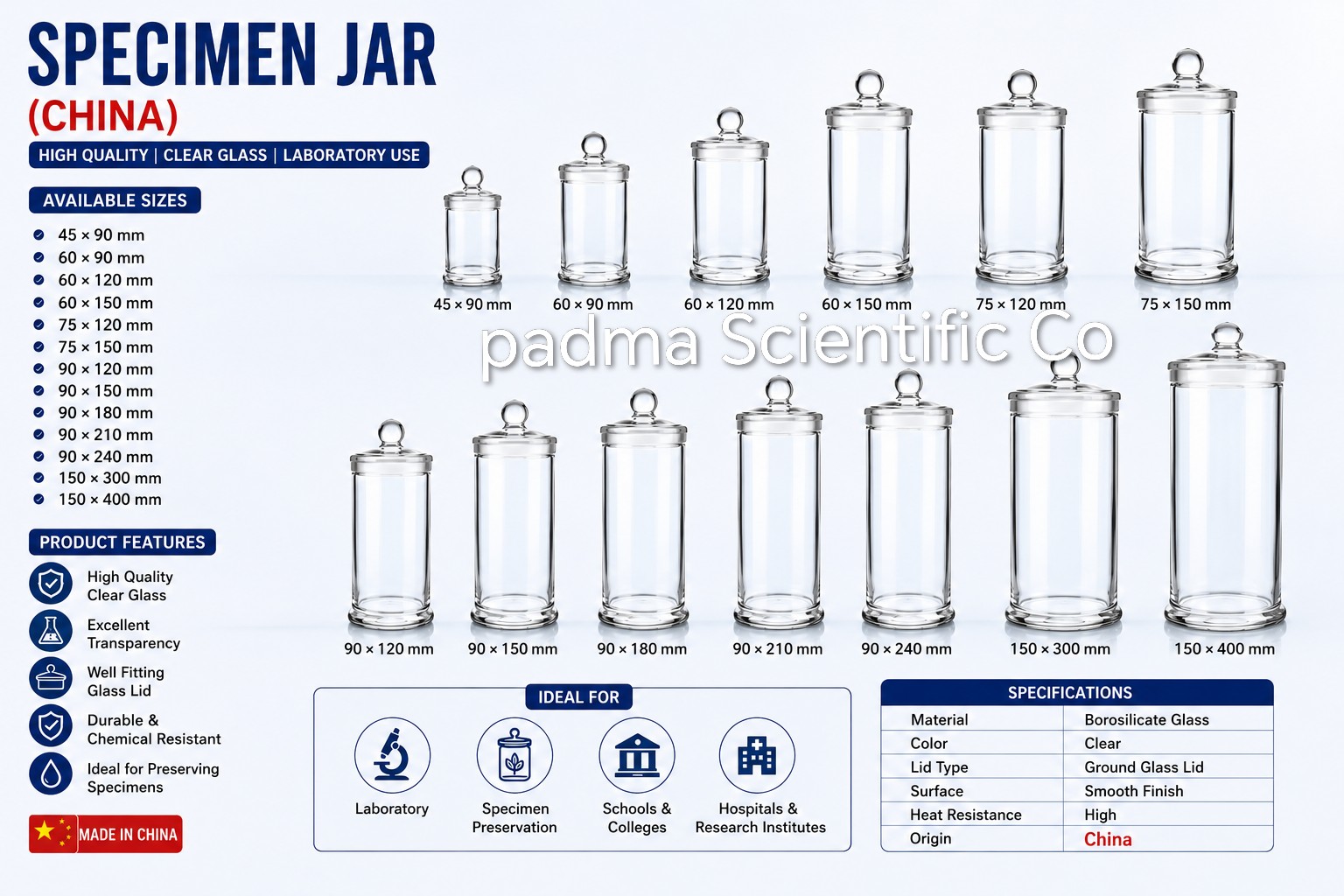


A specimen jar (or specimen container) is a specialized, leak-proof vessel used to collect, transport, store, and display biological, chemical, or medical samples. Depending on whether they are used for clinical diagnostics or long-term preservation, they vary significantly in material and structure.
Types of Specimen JarsClinical Collection Cups: Made of lightweight, disposable plastic (like polypropylene) with integrated volume graduations. They typically feature wide mouths and secure leak-proof lids. They are widely used for routine urinalysis, stool collection, and sputum samples.
Museum & Display Jars: Constructed from highly stable borosilicate glass, soda-lime glass, or thick optical acrylic (Perspex). These are typically rectangular or cylindrical and designed with flat, ground-glass lids to permanently display anatomical or natural history specimens.
Pre-filled Formalin Pots: Specialized plastic jars pre-loaded with a fixative liquid, such as 10% Neutral Buffered Formalin. These are critical in pathology to preserve biopsy tissues right after surgical removal
FeaturePlastic (Polypropylene/Polystyrene)Glass (Borosilicate/Soda-Lime)Acrylic (Perspex)Primary UseDiagnostics & short-term transportLong-term museum display & stable storageDurable, lightweight museum displayDurabilityHigh impact resistance; won’t shatterFragile; prone to breaking if droppedShatterproof, but easily scratched over timeChemical ToleranceGood for formalin; degrades with harsh solventsExcellent; highly resistant to acids and alcoholGood, but can crack under stress from certain compoundsReusabilityUsually disposable or single-useHighly reusable; autoclavable and easy to sanitizeReusable, but cannot be heat-sterilized (not autoclavable)
| Specimen Jar | 45x90mm, 60x90mm, 60x120mm, 60x150mm, 75x120mm, 75x150mm, 90x120mm, 90x150mm, 90x180mm, 90x210mm, 90x240mm, 150x300mm, 150x400mm |
|---|
+88 01720 342 211
padmascientificco@gmail.com
Store location
FOR NEWSLETTER
Subscribe to the weekly newsletter for all the latest updates
Copyright © 2025 Padma Scientific Co. All Rights Reserved.
Developed By © GrowingRank
Reviews
There are no reviews yet.