
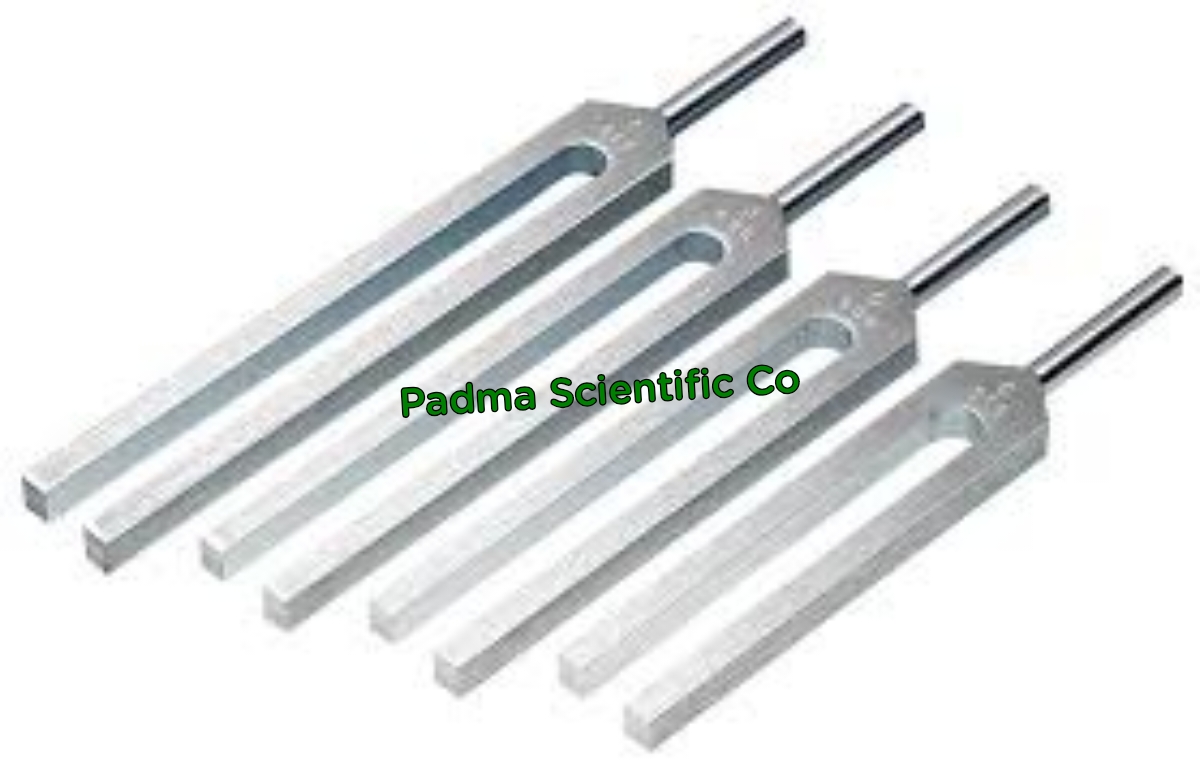


A tuning fork is a U-shaped metal tool with two prongs, called tines, made of elastic metal.
When struck, the tines vibrate back and forth, producing a constant sound of a fixed pitch.
The pitch depends on the length and mass of the tines, longer or heavier tines vibrate slower, producing a lower pitch.
As the tines move, they create compressions (high pressure) and rarefactions (low pressure) in the air.
This alternating pattern of pressure changes forms sound waves that travel through air.
In physics labs, tuning forks are used to study:
Sound wave formation and propagation
Resonance and frequency
The nature of longitudinal waves
It helps students understand how mechanical vibrations create audible sound.
+88 01720 342 211
padmascientificco@gmail.com
Store location
FOR NEWSLETTER
Subscribe to the weekly newsletter for all the latest updates
Copyright © 2025 Padma Scientific Co. All Rights Reserved.
Developed By © GrowingRank
Reviews
There are no reviews yet.