
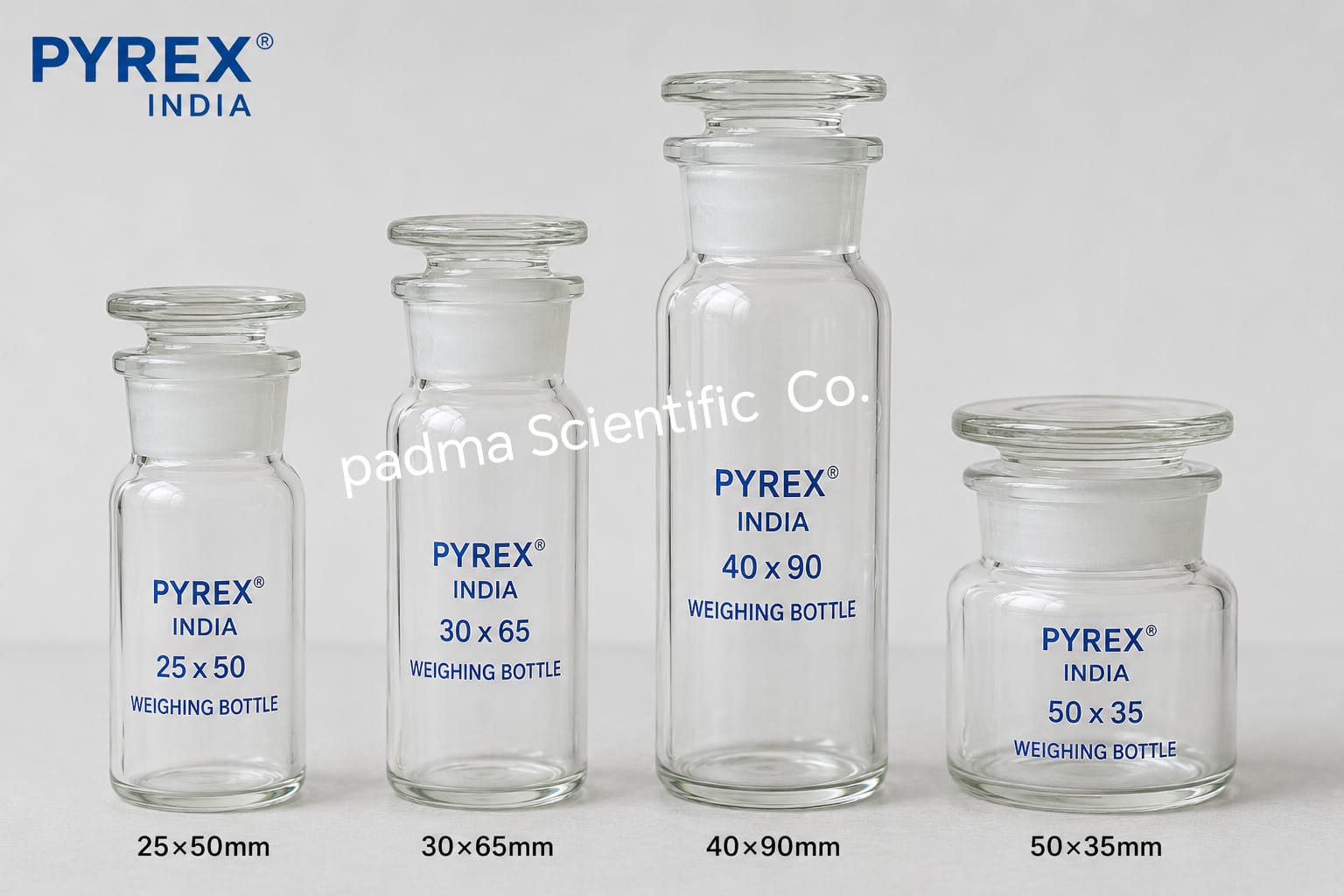

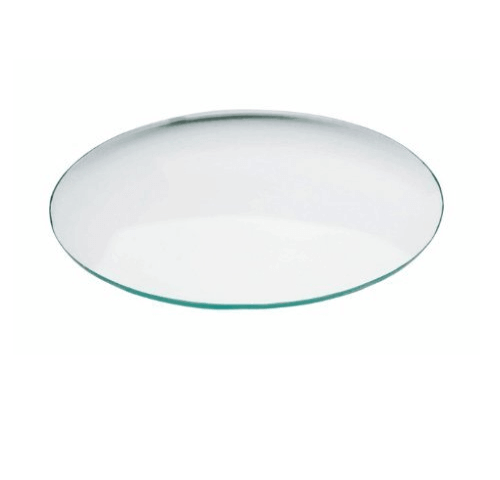


A weighing bottle is a specialized, lightweight laboratory container used primarily to achieve highly precise mass measurements of solid powders, crystals, or volatile liquids. It features a flat bottom and a tightly fitting, ground-glass stopper designed to isolate the sample from ambient air. This seal prevents mass variations caused by moisture absorption (hygroscopic samples) or evaporation.
Material: Typically constructed from chemically inert borosilicate glass (such as Pyrex). It resists thermal shock in drying ovens. Less fragile polypropylene (PP) plastic alternatives are also used.Low Empty Weight: Designed with thin glass walls to minimize its baseline mass on analytical balances.Airtight Joint
Common FormsSquat / Low Form: Features a wider base for stability. Ideal for spreading out samples evenly during oven-drying.Tall Form: Elongated body suited for transferring solids cleanly into a receiving vessel without using a funnel.Flat Boat Form
Core Laboratory ApplicationsGravimetric Analysis: Used to dry and accurately weigh compounds.Weighing by Difference: A standard technique where a sample’s exact mass is determined by subtracting the vessel’s post-transfer weight from its initial weight. This eliminates error from residual powder left behind.Safe Storage: Safely contains air-reactive, volatile, or light-sensitive compounds
| Weigh Bottle | 25x50mm, 30x65mm, 40x30mm, 40x90mm, 50x35mm |
|---|
৳ 100.00 Original price was: ৳ 100.00.৳ 90.00Current price is: ৳ 90.00.
+88 01720 342 211
padmascientificco@gmail.com
Store location
FOR NEWSLETTER
Subscribe to the weekly newsletter for all the latest updates
Copyright © 2025 Padma Scientific Co. All Rights Reserved.
Developed By © GrowingRank
Reviews
There are no reviews yet.